|
|
|
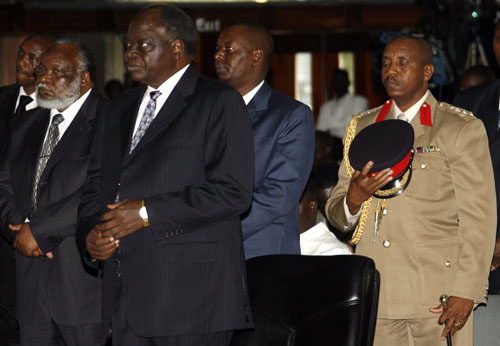
Government negotiator Mutula Kilonzo said the two sides had no other choice. "We have agreed that the solution is in a political settlement. How, when, where and by whom will be discussed on Monday," Mr. Kilonzo said. "We have no choice. We can't allow our people to kill each other because of election results." Earlier, an opposition legislator on the negotiating team claimed a power sharing deal had been reached. William Ruto said the two sides still were discussing who would lead the government and what roles each party would play. But Mr. Annan said Mr. Ruto "was jumping the gun." Opposition leader Raila Odinga originally said that only new elections would bring peace, while Mr. Kibaki maintained his position as president was not negotiable. The two came under international pressure to form a power-sharing government. On Thursday, Mr. Odinga retreated from his earlier calls that Mr. Kibaki should step down. "We are saying that we are willing to give and take. Initially our stand was that we won the elections, and Mr. Kibaki lost the elections, he should resign, and we should be sworn in, but we have said that we are not static on that point," Mr. Odinga told reporters. Speaking at a prayer meeting in Nairobi Friday, Mr. Kibaki said he was "encouraged" by progress in talks and reiterated "my personal support and that of my entire government to this process." Tens of thousands of opposition supporters took the street in the week after the announcement of election results. The government imposed a ban on public rallies, and police used live bullets, tear gas and water cannon to enforce the order. Internal Security Minister George Saitoti said the ban was lifted Friday because "security has generally improved." He urged legislators and others to hold meetings "to promote peace and national reconciliation" and not to use rallies as "avenues to incite violence." But some opposition supporters insisted they would not back down until Mr. Odinga was named president. "We won't, we can't agree. We want our rights, we will go back to the streets," said Evans Omogi, a driver in the western city of Kisumu, the scene of much of the worst violence. On Friday, about 5,000 people fled a makeshift camp for those forced from their homes in the western town of Kericho, fearing violence ahead of Saturday's funeral for an opposition legislator slain last week. Only about 1,000 people were left in the camp, said Red Cross official Susan Onyango. Kericho's main street was packed with families hastily piling furniture onto government trucks taking them to areas where their ethnic group was predominant. The slain legislator was killed in what the opposition described as a political assassination, but what police said was a crime of passion by a traffic policeman who believed his girlfriend was involved with the politician. The killing had sparked attacks on the policeman's ethnic group, the Kisii. |
|